
Coal is normally stored in large quantities in the stockyard before it is supplied to the boiler. During storage, coal does not remain completely inactive. It slowly reacts with oxygen present in the surrounding air and this oxidation process produces heat.
Under normal conditions, the generated heat is dissipated to the surroundings and the temperature of the coal remains under control. The problem starts when heat generation becomes greater than heat dissipation. The temperature inside the stockpile then begins to rise, which can further accelerate oxidation.
If this process continues unchecked, the coal can eventually reach a condition where ignition and burning occur. This phenomenon is known as spontaneous combustion of coal.
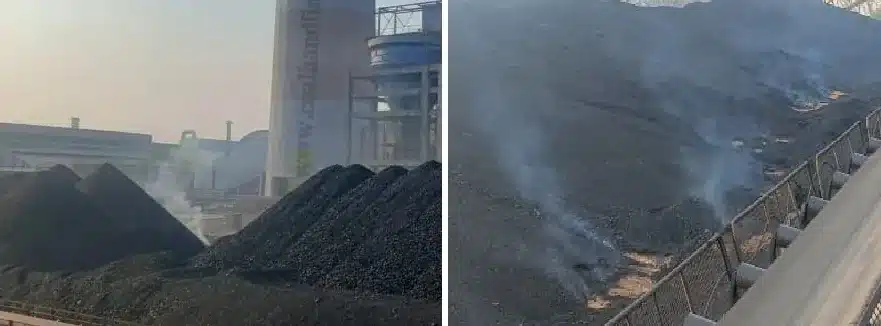
Understanding coal oxidation, identifying the factors that promote self-heating and taking timely preventive action are therefore important parts of coal stockyard management.
What Is Spontaneous Combustion of Coal?
Spontaneous combustion is an oxidation process in which coal gradually generates heat without the application of an external heat source.
The basic process can be represented as:
Coal + Oxygen → Oxidation → Heat Generation
When the heat generated by oxidation is dissipated quickly enough, there is generally no serious temperature buildup. However, when heat cannot escape from the stockpile at the same rate at which it is generated, the internal temperature begins to increase.
As the temperature rises, oxidation can become faster. This creates a self-accelerating cycle:
Oxidation → Heat Generation → Temperature Rise → Faster Oxidation → More Heat
If this cycle is allowed to continue, the temperature can eventually reach the ignition condition of the coal, resulting in flame and burning.
Process Leading to Spontaneous Combustion
The development of spontaneous combustion can be understood in a few simple steps:
-
Oxygen comes into contact with the coal surface.
-
Oxidation of coal begins.
-
The oxidation reaction generates heat.
-
If the heat is dissipated effectively, the coal temperature remains under control.
-
If heat dissipation is slower than heat generation, the coal temperature starts increasing.
-
Higher temperature accelerates the oxidation process.
-
Additional oxidation produces more heat.
-
Continued temperature rise can eventually lead to ignition and burning.
This is why early detection of abnormal temperature rise is important in a coal stockyard.
Factors Affecting Spontaneous Combustion of Coal
The factors affecting spontaneous combustion can broadly be divided into intrinsic factors and extrinsic factors.
1. Intrinsic Factors – Nature of Coal
Intrinsic factors are related to the characteristics and composition of the coal itself.
Pyrites
The presence of pyrites can influence the tendency of coal to self-heat. The characteristics and quantity of mineral matter present in the coal can therefore be important when assessing its storage behavior.
Moisture
Moisture can influence the heating behavior of coal. The effect is not simply that “more water means more combustion”; moisture behavior depends on the coal and storage conditions.
Therefore, moisture should be managed as part of an overall stockyard strategy rather than relying on water application as the primary preventive measure.
Particle Size and Surface Area
Fine coal particles have a greater surface area relative to their volume. More exposed surface means more opportunity for contact with oxygen.
Excessive generation and accumulation of fines can therefore increase the risk of self-heating.
Coal Rank and Petrographic Constituents
The rank and petrographic composition of coal can influence its oxidation characteristics and tendency toward self-heating.
Different coal sources can therefore behave differently even when they are stored under similar stockyard conditions.
Mineral Matter
The mineral matter associated with coal can also influence its behavior during storage and oxidation.
2. Extrinsic Factors
Extrinsic factors are conditions surrounding the coal rather than characteristics of the coal itself.
These can include: Temperature, Moisture conditions, Barometric pressure, Oxygen concentration, Bacterial activity, Coal seam characteristics, Method of working, Ventilation conditions, Timbering, Roadways
For a thermal power plant stockyard, factors such as stockpile geometry, compaction, air movement, storage duration and temperature monitoring are particularly important operational considerations.
Prevention of Spontaneous Combustion in Coal Stockyard
Preventing spontaneous combustion is better than trying to control a developed hot spot. Good stockyard management should therefore focus on limiting conditions that promote heat buildup and uncontrolled air movement.
The prevention and control strategy can be divided into three stages:
Stage 1 – Prevention
Stage 2 – Monitoring
Stage 3 – Controlling
Stage 1: Prevention
Proper Stockpile Shape
Coal should be stacked in a suitable and stable shape. A trapezoidal stockpile profile is commonly used in coal stockyards.
Proper stockpile formation helps maintain a controlled pile geometry and makes inspection and reclamation easier.
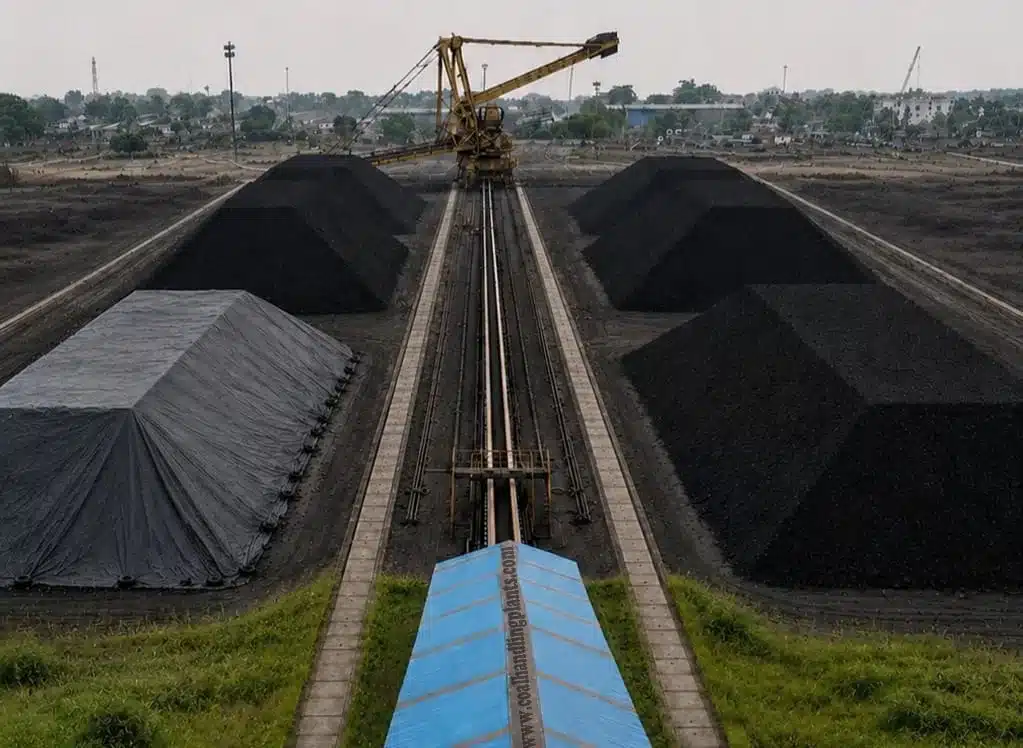
Maintain the Coal Heap
The stockpile should be regularly inspected and maintained to prevent the formation of cracks, channels and large voids.
These openings can provide pathways for air to penetrate deeper into the coal heap. Reducing uncontrolled air movement helps limit the supply of oxygen to areas where heating may begin.
Proper Compaction
Compaction of the coal heap using a dozer can help reduce voids and air channels within the stockpile.
The degree and method of compaction should be selected according to the coal characteristics and the approved stockyard operating procedure.
Control Storage Duration
Coal should not remain in storage unnecessarily for long periods.
Good stock rotation helps prevent older coal from remaining buried inside the stockpile for an extended time. Where applicable, a FIFO (First In, First Out) approach can be used as part of the coal stock management strategy.
Minimize Unnecessary Rehandling
Repeated dumping, reclaiming and restacking exposes fresh coal surfaces to oxygen.
Efficient stacking and reclaiming practices can reduce unnecessary handling and help maintain more stable stockpile conditions.
Tarpaulin Covering
Where appropriate, tarpaulin sheets can be used to cover exposed coal heaps as part of the site’s approved coal storage practice.
However, covering should be considered together with ventilation, drainage and overall stockpile management rather than as a standalone solution.
Stage 2: Monitoring of Coal Stockpile Temperature
Prevention alone is not enough. A stockyard should also have an effective monitoring system to identify self-heating at an early stage.
Temperature monitoring is one of the most important methods of detecting hot spots inside a coal stockpile.
The supplied procedure states that when the coal heap temperature is below 50°C, it is considered considerably safe, while at approximately 70°C or higher, regular monitoring is required.
These values should be treated as guidance from the supplied procedure and should not be considered universal limits for every coal type or plant. The actual alarm and action levels should follow the site’s approved procedure and the characteristics of the coal being stored.
Manual Temperature Measurement
Temperature probes can be used to measure the temperature at selected locations within the stockpile.
However, manual measurement becomes difficult when the stockpile is very large. It may not be practical to continuously monitor every section of a large coal heap.
Thermal Imaging System
A fixed thermal imaging system can provide continuous observation of a large stockyard area.
The system can help identify abnormal surface temperatures and localized hot spots. This allows operators to investigate an area before the situation develops into visible smoke or fire.
For a large thermal power plant coal yard, combining fixed thermal monitoring with periodic physical inspection can provide better coverage than relying on manual measurement alone.
Stage 3: Controlling a Hot Spot
When abnormal temperature, smoke or other indications of heating are detected, control action should be initiated according to the plant’s approved emergency and fire-prevention procedure.
The objective is to prevent the hot area from developing into a larger fire.
1. Excavation Using HEMM
Heavy Earth Moving Machinery (HEMM) can be used to excavate the affected coal when it is safe and permitted by the site’s procedure.
The affected coal can be separated from the surrounding stockpile and allowed to cool under controlled conditions. After cooling, the material may be reclaimed or re-compacted or otherwise managed according to the approved procedure.
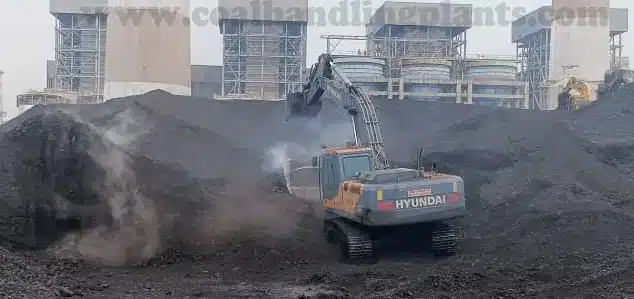
HEMM operation around a hot coal pile requires careful planning because disturbing a heated area can change airflow and potentially increase oxidation.
2. Oxygen Reduction or Sealing
Suitable sealing agents may be used where approved to reduce oxygen access to the affected area.
Reducing oxygen availability can help slow the oxidation reaction and limit further heat generation.
The selection and application of any sealing agent should be based on the plant’s approved fire-control procedure and the manufacturer’s recommendations.
3. Water Application
Water sprinklers or controlled water application may be used as a firefighting or cooling measure where appropriate.
However, water should not automatically be considered the solution for every self-heating situation. The suitability of water application depends on the coal condition, stockpile configuration and plant procedure.
Water application should therefore be carried out under controlled conditions and according to the site’s approved firefighting practice.