
In large thermal power plant, the auxiliary boiler plays an essential role in supporting the main steam generation cycle. While the main boiler produces large volumes of steam for driving turbines and generating electricity, the auxiliary boiler in thermal power plant ensures steam availability during start-up, shutdown, standby and emergencies.
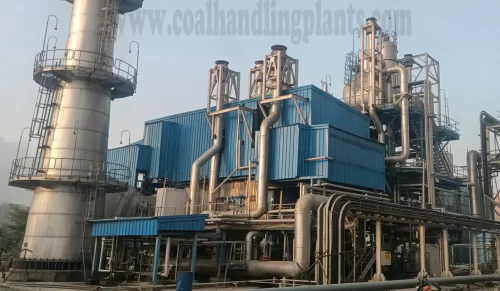
Beyond providing backup support, auxiliary boilers also handle auxiliary services such as:
- Fuel heating for heavy oils
- Deaerator steam supply
- Seal steam for pumps and turbines
- Process heating for auxiliary equipment
Because of their smaller capacity, flexibility and quick response, auxiliary boilers are indispensable in ensuring operational reliability and plant safety.
Auxiliary Boiler and Associated Systems
Auxiliary boiler components are almost the same as standard steam boiler components. These includes:
1. Feed Water System
Any high pressure boiler should be operated with demineralized water. The purpose of feed water system is to supply demineralized water to the boiler at proper pressure and temperature, to prevents corrosion and scaling, ensures steady steam generation.
Key components include:
- Deaerator – Removes dissolved oxygen & CO₂. Read more…
- Boiler Feed Water Pumps – Provide required pressure.
- Feed water flow control station – Maintain drum level and flow.
2. Pressure Parts
The pressure parts of an auxiliary boiler are the components that directly contain water, steam, and flue gases under high pressure and temperature. These include:
- Economizer – Preheats feedwater using waste heat from flue gases.
- Steam Drum – Separates steam and water; fitted with gauges, transmitters, and safety valves.
- Water Drum & Downcomers – Distribute water to furnace walls for circulation.
- Risers – Carry steam-water mixture back to steam drum.
- Superheater – Raises steam temperature for auxiliary processes.
- Attemperator – Maintains final steam temperature with water spray.
3. Blow Down System
The boiler blowdown system safely drains high-pressure water and steam to maintain water chemistry.
- Continuous Blowdown (CBD): Removes dissolved solids.
- Intermittent Blowdown (IBD): Removes sludge deposits.
All drains (from steam piping, superheater, economizer, etc.) are connected to a blowdown tank for safe disposal.
4. Combustion Air System·
- Forced Draft (FD) Fan supplies combustion air to burners.
- Ducting and dampers regulate airflow.
- Ensures stable combustion and proper air-fuel ratio.
5. Furnace
The furnace is the primary heat generation zone of the boiler where fuel and air mix and undergo controlled combustion. It is lined with water-cooled walls (water wall tubes) that absorb radiant heat and convert water into steam. The furnace is designed to maintain proper flame stability, efficient combustion, and safe operation by ensuring adequate space for complete fuel burning and by preventing flame impingement on tube surfaces.
6. Fuel Firing System
The fuel firing system includes:
- Burners – For atomizing and burning oil/gas.
- Fuel Oil Piping – For transport and control of fuel.
- Atomizing Steam/Air Piping – Ensures fine fuel atomization.
- Burner Management System (BMS) – Controls safe start-up, monitoring, and shutdown.
7. Flue Gas System
Flue gases generated in the furnace first pass through the superheater. They then move across the convection bank tubes in the second pass, followed by the economizer, and finally exit through the stack. Flue ducts connect the boiler to the stack. To handle thermal expansion safely, expansion joints are installed at the boiler outlet and at the stack entry.
8. Chemical Dosing System
This system maintains boiler water chemistry.
- Phosphate dosing prevents scale and alkalinity imbalance.
- Oxygen scavengers protect against corrosion.
- pH control chemicals keep the water alkaline.
9. Steam & Water Sampling System
Sampling ensures continuous monitoring of water and steam quality.
The sample system includes the sample cooler and the associated analyzers and the cooling water sub-system .The sample coolers are simple shell and coil type heat exchangers. In these sample coolers, the sample is passed through the coils while the cooling water is passed around the coils on the shell side. Individual sample coolers are provided with isolation valves on the cooling water inlet & cooling water return lines. The cooling water is provided from the plant.
There are four sample coolers provided in the boiler to get water and steam samples are Boiler Feed water Sample cooler, Drum water sample cooler, Saturated steam sample cooler, Superheated steam sample cooler
Boiler Startup and Shutdown
The boiler start up and shut down procedures as applicable for the following boiler conditions:
1. Start up of a cold boiler
A cold start-up is carried out when the boiler has been shut down for a long period and is at ambient temperature.
- Inspect the boiler thoroughly for leaks, valve positions, and water level.
- Ensure all auxiliaries (fans, pumps, fuel system) are ready.
- Fill the boiler with treated feedwater up to the required drum level.
- Start the forced draft fan and carry out a proper furnace purge to remove combustible gases.
- Initiate burner ignition using the Burner Management System (BMS).
- Raise pressure and temperature gradually to avoid thermal stress on pressure parts.
- Warm up steam lines by opening drains before admitting steam to the system.
2. Start up of a warm / Hot boiler
This applies when the boiler is already at a higher metal temperature due to a short outage.
- Since the boiler is already hot, filling and heating require less time.
- Water level and system checks must still be done.
- Purge the furnace with FD fan, but for a shorter duration than cold start-up.
- Start burners and bring the boiler back to pressure slowly, avoiding rapid heating.
- Steam lines and headers should still be drained to prevent water hammer.
- The boiler reaches stable operating condition faster compared to a cold start.
3. Boiler shut down
A shut-down may be short-term or long-term depending on operational requirements.
- Short-term shutdown: Gradually reduce load, stop fuel supply, and purge furnace with FD fan. Keep boiler filled with water and maintain pressure for quick restart.
- Long-term shutdown: After cooling, drain the boiler or preserve it using chemical or dry methods to avoid corrosion.
- Isolate the boiler from steam and feedwater systems, and close all valves properly.
- Record boiler condition, water chemistry, and reasons for shutdown for future reference.
Recommended Maintenance Practices
Systematic maintenance is essential to keep the boiler and its auxiliaries in good condition and to obtain reliable operation of the boiler with high availability and plant load factor. Effective maintenance aims at timely inspection of parts to repair or replace defective components and to prevent their failure when the boiler is in service.
Maintenance can be classified as –
• Preventive maintenance -mostly condition based
• Annual Boiler overhauls to clean and inspect pressure parts. The shutdown period of the overhaul is also utilized to attend to systems and parts which cannot be attended during short shutdowns or when the boiler is in operation.
Common Problems and Solutions in Auxiliary Boilers
- Low Steam Pressure
- Possible Causes: Insufficient fuel firing, poor atomization, low air supply.
- Solutions: Inspect burners and atomizers, check fuel pressure, verify FD fan operation.
- High Drum Water Level
- Possible Causes: Faulty feedwater control valve, malfunctioning level transmitter.
- Solutions: Calibrate drum level transmitters, service or replace feedwater control valve.
- Low Drum Water Level (Dry Running Risk)
- Possible Causes: Pump failure, blocked feed line, control loop malfunction.
- Solutions: Check feedwater pump, clear suction/discharge line, verify drum level control loop.
- Tube Leakage or Failure
- Possible Causes: Corrosion, scaling, overheating, poor water chemistry.
- Solutions: Maintain strict water quality, carry out regular chemical dosing, replace damaged tubes.
- Flame Failure
- Possible Causes: Low fuel pressure, clogged nozzles, faulty ignition system, scanner failure.
- Solutions: Clean or replace fuel nozzles, check ignition electrodes, verify flame scanner.
- Excessive Blowdown Requirement
- Possible Causes: High dissolved solids in water, improper chemical dosing.
- Solutions: Optimize dosing system, improve DM water treatment, monitor conductivity closely.
- Abnormal Noise or Vibration
- Possible Causes: Air ingress, faulty pump bearings, loose supports.
- Solutions: Check pump and fan alignment, tighten supports, eliminate air leaks.
- Black Smoke or Unburnt Fuel in Flue Gas
- Possible Causes: Incomplete combustion due to excess fuel or insufficient air.
- Solutions: Adjust air-fuel ratio, clean burners, ensure proper atomization.
- High Flue Gas Temperature
- Possible Causes: Fouled economizer or superheater tubes, soot deposition.
- Solutions: Perform soot blowing, clean heat exchanger surfaces.
- Safety Valve Lifting Frequently
- Possible Causes: Overpressure due to faulty pressure control, sudden load drop.
- Solutions: Check pressure control system, recalibrate safety valves, inspect steam demand balance.
Frequently Ask Questions (FAQs) on Auxiliary Boilers
It provides steam during start-up, shutdown, standby, and emergencies, and supports auxiliary services like deaeration, fuel heating, and seal steam.
The main boiler produces large volumes of steam for turbines, while the auxiliary boiler provides smaller amounts of steam for support systems and emergency use.
Key components include the feedwater system, steam drum, economizer, superheater, furnace, fuel firing system, blowdown system, and flue gas path.
Auxiliary boilers can run on light diesel oil, furnace oil, natural gas or dual fuels depending on design.
Blowdown removes dissolved solids, sludge, and impurities from boiler water, preventing scaling and corrosion.
Maintain proper water chemistry, perform regular inspections, avoid overheating, and ensure good circulation.
Safety is ensured by Burner Management System (BMS) interlocks, safety valves, alarms, proper water chemistry, and trained operators.
The economizer preheats feedwater using flue gases, improving efficiency and reducing fuel consumption.
It raises saturated steam temperature above saturation level, producing dry, superheated steam for auxiliary services and process use.
Deaeration removes dissolved oxygen and carbon dioxide, preventing corrosion and extending tube life.
With proper operation and maintenance, the typical lifespan is 20–25 years.
Dry preservation (desiccants/inert gas) or wet/chemical preservation (treated water with scavengers and alkalinity control) to prevent corrosion.
Daily drum level checks, weekly blowdown, monthly burner inspection, and annual overhaul with cleaning and safety valve calibration.
Ultrasonic thickness testing, dye penetrant or magnetic particle testing, radiography for welds, and borescope inspections.
Drum level control, fuel/air ratio control, steam temperature control (via attemperator), and furnace draft control.
It reduces make-up water demand, saves fuel and chemicals, and stabilizes water chemistry.
Insufficient purge, rapid firing rates, not draining steam lines, and admitting steam to cold lines—causing thermal shock or water hammer.
On condition: trigger when stack temperature rises abnormally or when differential pressure across tube banks increases.
Good combustion control (excess air tuning), clean burners, and, where required, add-on controls like low-NOx burners or scrubbers.
Keep strainers clean, check spray patterns, maintain proper atomizing medium (steam/air) quality and pressure, and replace worn nozzles.
Good insulation limits heat loss, prevents hot spots, and stabilizes metal temperatures—benefiting both efficiency and safety.
If you still have any doubts or want to ask specific questions related to thermal power plant equipment, feel free to post your query here: Ask a Question. Our team and community will provide answers, and you can view them anytime under the Question and Answer menu.
Note: Your question will be visible only after approval by the Admin.