
Conveyor belts are the lifeline of material handling industries — from mining and power generation to cement, steel, and logistics. The demand for durable, heat-resistant, and high-tensile conveyor belts has driven innovation among global manufacturers.
Whether you’re a procurement engineer, project manager, or maintenance professional, finding a reliable conveyor belt supplier can significantly impact your plant efficiency and downtime costs.
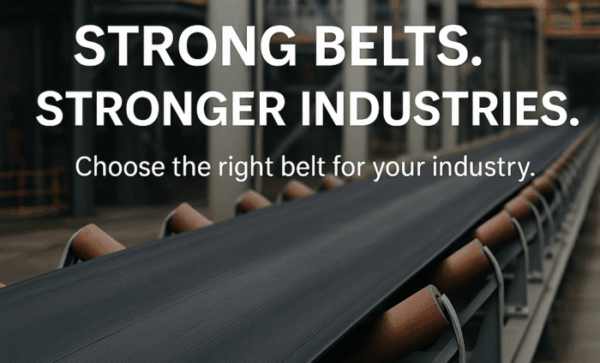
This guide lists the top conveyor belt companies in the world, along with key details to help you choose the right manufacturer for your industrial application.
Top Conveyor Belt Manufacturers Worldwide
1. Continental AG (ContiTech & Phoenix Brand – Germany)
-
🌍 Headquarters: Hannover, Germany
-
🏭 Specialization: Steel-cord, textile, heat-resistant, energy-efficient belts
-
💡 Highlights: A global leader in industrial belting and rubber technologies. Continental’s ContiTech division produces high-performance conveyor belts for mining, power, and cement industries. They are pioneers in Low Rolling Resistance (LRR) and smart monitoring systems for predictive maintenance.
-
🔗 Website: www.continental-industry.com
2. Fenner Dunlop (UK / USA / Australia)
-
🌍 Headquarters: Drachten, Netherlands (Europe) / Coraopolis, USA (Americas)
-
🏭 Specialization: Fire-resistant, anti-static, steel-cord, and solid-woven belts
-
💡 Highlights: Over 150 years of belting excellence. Fenner Dunlop’s “Made in USA” range serves mining, coal handling, and ports. Known for FRAS-certified belts and superior splice performance.
-
🔗 Website: www.fennerdunlopamericas.com
3. Semperit (Semperit Group – Austria)
-
🌍 Headquarters: Vienna, Austria
-
🏭 Specialization: Textile, steel-cord, and heat-resistant belts
-
💡 Highlights: Manufactures heavy-duty belts for mining, cement, and ports. Known for high-tensile strength and long service life, Semperit belts are used in demanding European and Asian operations.
-
🔗 Website: www.conveyor-belt.semperitgroup.com
4. Yokohama Rubber Co., Ltd. (Japan)
-
🌍 Headquarters: Tokyo, Japan
-
🏭 Specialization: High-tension steel-cord and heat-resistant belts
-
💡 Highlights: Supplies overland conveyor belts for bulk material handling. Yokohama’s belts are known for long fatigue life and uniform load distribution across large conveyors.
-
🔗 Website: www.y-yokohama.com
5. Habasit AG (Switzerland)
-
🌍 Headquarters: Reinach, Switzerland
-
🏭 Specialization: Modular plastic, food-grade, and PU/PVC belts
-
💡 Highlights: A global leader in food, packaging, and logistics conveyor belts. Habasit’s modular designs offer easy cleaning, hygiene compliance (FDA/EC), and quick installation.
-
🔗 Website: www.habasit.com
6. Smiley Monroe Ltd. (United Kingdom)
-
🌍 Headquarters: Lisburn, Northern Ireland, UK
-
🏭 Specialization: Hot-vulcanized endless belts, custom cut rubber, and belt service products
-
💡 Highlights: Trusted OEM supplier for conveyors.
-
🔗 Website: www.smileymonroe.com
7. Oriental Rubber Industries Pvt. Ltd. (India)
-
🌍 Headquarters: Pune, India
-
🏭 Specialization: Textile, steel-cord, and heat-resistant belts
-
💡 Highlights: Over 75 years of expertise. A leading exporter to 50+ countries. Known for high-strength, low-stretch belts for mining, power, and port sectors.
-
🔗 Website: www.orientalrubber.com
8. Continental Belting Pvt. Ltd. (India)
-
🌍 Headquarters: Mumbai, India
-
🏭 Specialization: Rubber conveyor belts, heat/cold-resistant belts, tear guard belts
-
💡 Highlights: Manufactures M-24 grade belts under ISO and DIN standards. Supplies to cement, steel, and CHP systems across India and abroad.
-
🔗 Website: www.continentalbelting.com
9. Forech India Ltd. (India)
-
🌍 Headquarters: New Delhi, India
-
🏭 Specialization: Fabric and steel-cord belts, splicing kits, and rubber lining products
-
💡 Highlights: Over four decades of service to mining and thermal power sectors. Provides end-to-end belting and installation solutions.
-
🔗 Website: www.forech.com
10. Somi Conveyor Belting Ltd. (India)
-
🌍 Headquarters: Jodhpur, Rajasthan, India
-
🏭 Specialization: Fabric belts, heat-resistant, and FRAS belts
-
💡 Highlights: Exports to over 40 countries. Focused on eco-friendly manufacturing and energy-efficient belts.
-
🔗 Website: www.somiconveyor.com
11. Dunlop Conveyor Belting Europe B.V. (Netherlands)
-
🌍 Headquarters: Drachten, Netherlands
-
🏭 Specialization: Fire-resistant, abrasion-resistant textile belts
-
💡 Highlights: Part of Fenner Dunlop Group. European-manufactured belts known for exceptional durability and strict EN quality compliance.
-
🔗 Website: www.dunlopcb.com
How to Select the Right Conveyor Belt Company
Choosing the right conveyor belt manufacturer or supplier ensures long belt life, low downtime, and reliable operation. Here are the key points to consider:
1️⃣ Understand Your Requirement
Before contacting suppliers, note:
- Type of material handled (coal, limestone, clinker, etc.)
- Belt width, speed, and capacity
- Working temperature and environment (hot, dusty, oily, wet)
- Conveyor length, lift, and pulley diameters
👉 This helps the manufacturer suggest the correct belt type and grade.
2️⃣ Check Belt Quality and Standards
Good manufacturers always provide test certificates for:
- Tensile strength and elongation
- Abrasion resistance (Grade M-24 / DIN-X / Y)
- Fire resistance and anti-static (FR / FRAS)
- Heat or oil resistance, if required
- ISO / DIN certification
⚙️ Ask for sample reports or previous client references.
3️⃣ Evaluate Technical Support
Reliable companies don’t just sell belts — they support installation and maintenance.
Check if they provide:
- Hot or cold splicing services
- Belt tracking and training help
- Preventive maintenance visits
- Spare parts and quick response team
4️⃣ Review After-Sales and Warranty
Ask these questions:
- Warranty on belt and splice joint?
- Replacement or repair policy?
- Response time for breakdown service?
⏱️ Prefer vendors with 24×7 technical assistance and local service centers.
5️⃣ Compare Total Value — Not Only Price
Don’t choose only on Amount/meter. Consider:
- Belt life (hours or tons conveyed)
- Power savings (energy-efficient compounds)
- Downtime cost and service quality
💰 A slightly higher-priced belt from a reputed brand often gives lower total cost per ton.
6️⃣ Check Company Reputation
Select suppliers with:
- 10+ years industry experience
- Verified client list (power, cement, mining plants)
- In-house testing and R&D lab
- Strong online presence and customer feedback
🔚 Final Advice
Choose a manufacturer, not just a trader.
Ask for technical data sheets, test reports, and a clear warranty.
A good conveyor belt company focuses on performance, safety, and long-term reliability—not only the sale.
❓ Frequently Ask Questions (FAQs)
Germany and Japan lead globally, with Continental, Phoenix, and Bridgestone being dominant players.
Material type, temperature, load variation, and maintenance frequency. Regular cleaning and proper tensioning extend belt life.
Cover grades indicate the abrasion and heat resistance level of the belt. For example, M-24 or DIN-X is used in heavy-duty applications like coal or ore handling, while N-17 or DIN-Y is used for medium-duty material.
“EP 400/3” defines the carcass design and strength:
E = Polyester fabric in the warp (lengthwise) direction
P = Nylon fabric in the weft (crosswise) direction
400 = Tensile strength of 400 N/mm per ply
/3 = Three plies of fabric
Thus, an EP 400/3 belt is a medium-strength, three-ply polyester–nylon belt suitable for general industrial applications.
Maintain correct tension and alignment, keep the belt clean, and inspect idlers, pulleys, and scrapers regularly. Install impact beds, skirt sealing, and belt cleaners to reduce edge wear. Proper splicing, timely lubrication of rollers, and monitoring systems like rip-detection and belt-tracking sensors can double belt lifespan.
Conveyor belts are graded internationally based on their cover properties, abrasion resistance, heat tolerance, and specific industrial use. The most recognized global grades include:
Grade M (M-24 / DIN-X): Premium abrasion-resistant belt used in mining, quarrying, and power generation. Offers high tensile strength and wear resistance.
Grade N (N-17 / DIN-Y): General-purpose belt used in cement, steel, and logistics industries. Suitable for medium-duty conveying.
Grade W (Wear-Resistant): Extra-thick top cover for high-impact and highly abrasive materials like iron ore or clinker.
Grade HR (Heat-Resistant): Withstands continuous material temperatures up to 200 °C (392 °F). Used in cement kilns, foundries, and sinter plants.
Grade OR (Oil-Resistant): Made from special nitrile compounds for recycling, chemical, fertilizer, and food industries where contact with oil or grease occurs.
Grade FR or FRAS (Fire-Resistant / Fire-Resistant Anti-Static): Designed for coal mines, ports, and thermal power plants; meets ISO 340, EN 14973, and MSHA standards.
Grade SAR (Super Abrasion-Resistant): Used for extremely abrasive materials such as bauxite, coke, or crushed rock under severe impact.
These grades are standardized under international norms like DIN 22102 (Germany), ISO 14890 (Global), and AS 1332 (Australia) — ensuring compatibility and performance across the world.